Chamois 1969
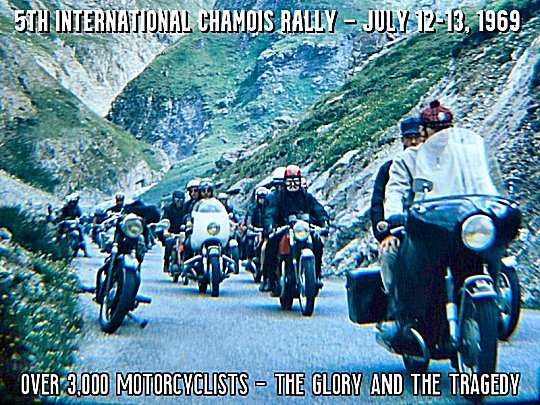
On the weekend of 12–13 July 1969, for the fifth edition of the Chamois Rally, Val-d’Isère in Savoie bore little resemblance to the quiet Alpine resort usually frequented by holidaymakers and winter skiers.
Nestled high in the Alps and accustomed to relative calm outside the ski season, the small mountain town suddenly found itself at the centre of an extraordinary invasion of motorcycles from across Europe.
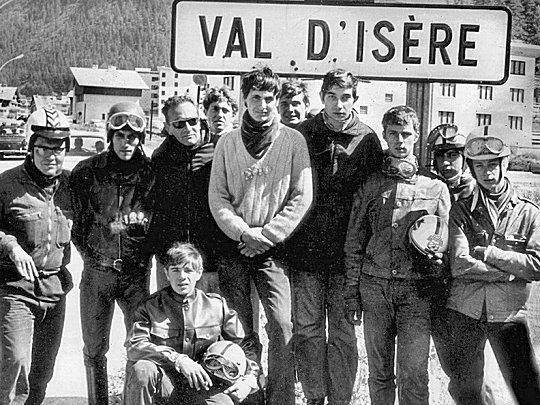
In Val d’Isère, freedom arrived by the thousands — riders from across Europe answering nothing but the call of the open road.
For two days, Val-d’Isère was quite literally overwhelmed by thousands of motorcycle touring enthusiasts who had travelled from France, Belgium, Switzerland, Italy, Germany and beyond to attend what had become the largest motorcycle gathering in the country.
Every street, hotel entrance, café terrace and empty patch of ground disappeared beneath rows of parked motorcycles, while the constant roar of engines echoed through the valley from dawn until late into the night.
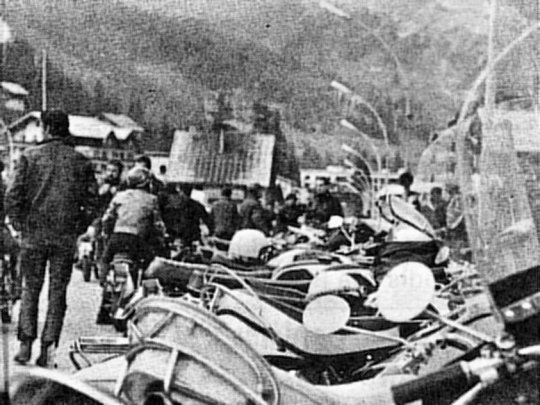
Motorcycles filled every avenue of Val d’Isère, endless rows of machines lining the village from dawn until deep into the night.
The atmosphere was unlike anything the resort had ever experienced. Leather jackets, camping gear, oil-stained toolkits and exhausted riders filled the avenues, transforming the elegant Alpine village into a vast open-air camp devoted entirely to motorcycling.
For one weekend, Val-d’Isère ceased to belong to tourists and skiers; it belonged to the riders.
When motorcyclists sought respectability
Pierre de Seynes, secretary of the BMW Club de Paris and one of the event’s organizers, described them as “real motorcyclists,” in contrast to the caricatured image of the so-called French “blousons noirs” — the rebellious and often delinquent youth gangs associated at the time with leather jackets, rock ’n’ roll, and antisocial behaviour.
The blousons noirs were a rebellious French youth subculture of the late 1950s and early 1960s,, inspired by American rock ’n’ roll and greaser style. Known for black leather jackets, jeans, plaid shirts, and riding motorcycles or mopeds, they were popularly associated with minor crime, antisocial behaviour, and hooliganism, becoming a symbol of youthful delinquency and rebellion.
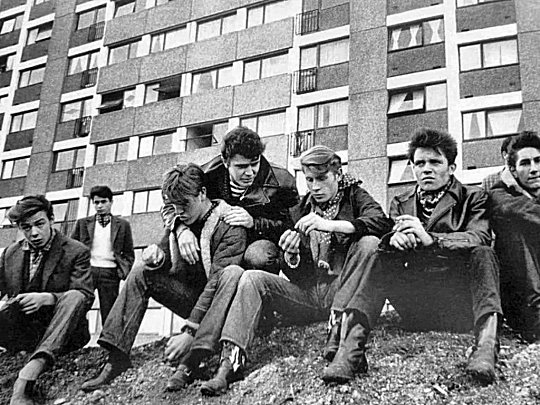
Blousons noirs in the 1960s at the foot of the housing projects in Le Pré-Saint-Gervais, Paris.
At forty years old, with his ginger moustache and distinctly British appearance, this company director — who also owned two cars — embodied motorcycling as a passion rather than a form of marginality.
According to him, the Chamois Rally had been created to restore a sense of pride to riders who were too often treated as outcasts the moment they arrived by motorcycle outside a hotel or restaurant.
Europe’s motorcycle pilgrimage
On the Saturday morning, from the very first light of dawn, the roads of France began to vibrate with the sound of motorcycles. Some had left home before sunrise; others had already been riding since the previous evening.
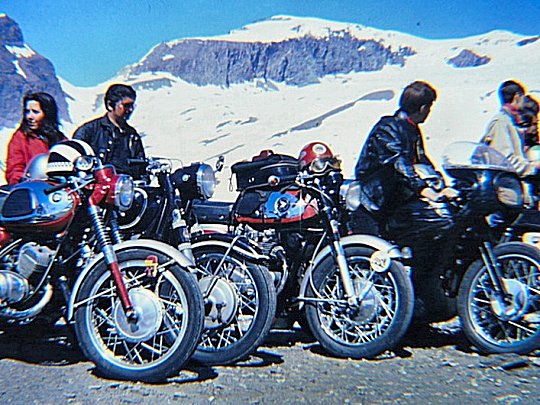
That year marked a turning point in motorcycle history. Japanese manufacturers introduced a new generation of machines that were more reliable, more powerful, and more modern than ever before.
As the riders approached the Alps, and then Val-d’Isère itself, the roads turned into an unbroken procession of motorcyclists travelling alone, in pairs, or in small groups. Headlights pierced the darkness while engines echoed across the still-damp national roads after recent rainstorms.
Over the final hundred and fifty kilometres, the flow of motorcycles became so dense that it was almost impossible to return the salute of riders passing in the opposite direction.
That year, strong winds swept through the upper Isère valley — an unusual phenomenon for the region — though fortunately the rain spared most travellers.
Kilometre after kilometre, the scenery changed. The roads became narrower and steeper, the air cooler, the vegetation denser.
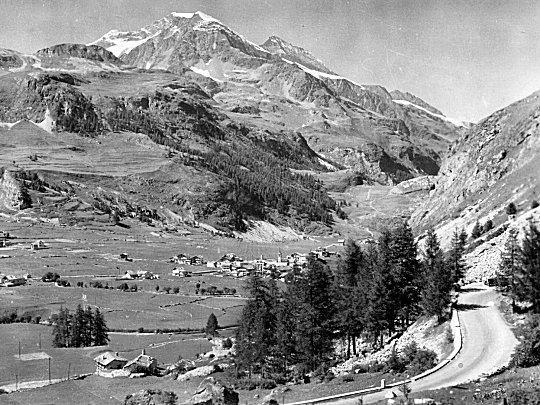
Tignes lies in the heart of the French Alps in the Upper Tarentaise Valley, near both the Italian border and the Vanoise National Park. Several thousand motorcyclists rode along this road — visible at the bottom right of the photo — on their way to the Chamois rallies between 1965 and 1972.
Then came the reservoir of Tignes and the three infamous tunnels: narrow, sharply curved, and completely devoid of lighting. Immersed in near-total darkness, they injured dozens of riders every year, to the point that attempting them alone was strongly discouraged.
And then, after one final bend and a last straight stretch of road, Val-d’Isère finally appeared, its avenues disappearing beneath endless rows of motorcycles parked handlebar to handlebar.
Riders from all over Europe filled the streets for one of the most iconic motorcycle gatherings of its era.
Thousands of black leather jackets, gleaming chrome, multicoloured helmets and roaring exhaust pipes transformed the resort into the motorcycle capital of Europe.
For forty-eight hours, Val-d’Isère thundered and crackled beneath the smell of petrol and hot oil.
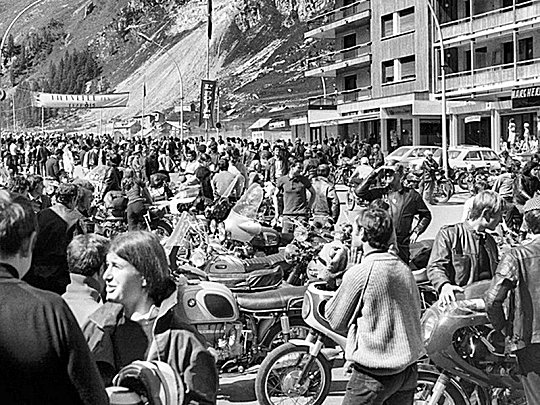
When the roads belonged to riders.
The locals had learned to take precautions. Several days before the rally, pharmacies would see their stocks of earplugs completely wiped out.
The disorder of freedom
Upon arrival, many riders immediately set about pitching their tents wherever space could still be found.
Meadows, roadside embankments and every available corner around Val-d’Isère quickly turned into improvised campsites filled with motorcycles, canvas tents and the smell of petrol, damp grass and camp stoves.
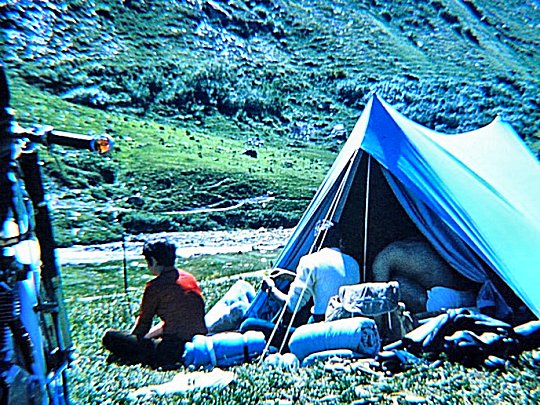
Hotels were full. The mountains were free. Sleep was optional. The Chamois was mandatory.
The less adventurous — or simply the more cold-sensitive — set off in search of the increasingly hypothetical comfort of a hotel room, though most establishments had long since been overwhelmed by the influx of riders.
Others wandered endlessly through the crowded streets of Val-d’Isère, looking for friends lost somewhere among the thousands of motorcycles, or simply soaking in the unique atmosphere of the gathering.
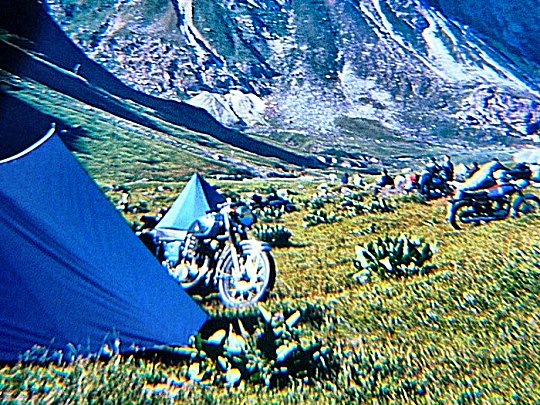
Five-star mountain views, zero-star sleep. Wake-up service provided by two-stroke engines at dawn.
Throughout the Saturday, daily life at the rally settled into its own peculiar rhythm. Time seemed to revolve entirely around motorcycles, chance encounters and the constant movement of people through the streets and campsites of Val-d’Isère.
The riders lived simply, surviving on packets of crisps, dry sausage, thick slices of Savoyard tome cheese and generous quantities of red wine shared between tents, panniers and roadside picnics.
Meals were improvised, conversations endless, and strangers became companions within minutes beneath the noise of engines and the cold Alpine air.
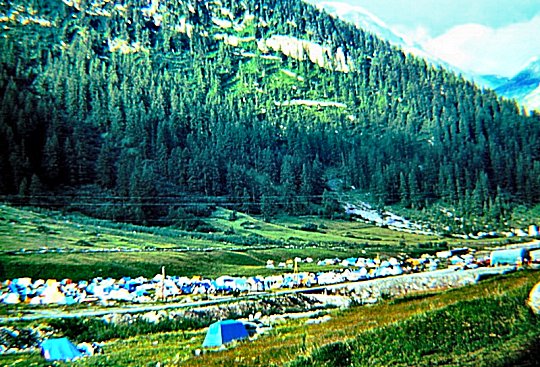
No reservations. No luxury. By nightfall, the valley turned into a sprawling city of tents and motorcycles.
Those who had not yet ridden enough would head off toward the Col de l'Iseran. Riders tested their own machines, let others try them, and all too often one could see helmetless bikers, motorcycles racing down the main street at full speed, or launching hard through the middle of the crowds.
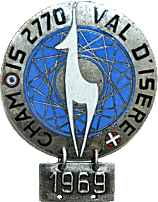
In the evening, after long queues and confusion outside the local tourist office — where participants struggled to collect the rally’s famous commemorative medal — the lack of atmosphere and organization left many with little choice but to gather around wood fires.
Throughout the night, engines continued to echo through the mountains. Late arrivals and riders returning from the Col de l'Iseran kept riding until dawn, and from five in the morning the most enthusiastic began once again revving their engines at full throttle, much to the despair of sleepless holidaymakers.
Some participants even removed their exhausts deliberately to make more noise in the streets of Val-d'Isère. A few sped through town recklessly, sometimes knocking pedestrians over, while others drank heavily in the evening and clashed with security staff. Sadly, such excesses helped tarnish the reputation of motorcyclists as a whole.
Bigger than ever
For its fifth edition, the Chamois Rally surpassed all expectations and shattered every previous attendance record.
The organizers had hoped for between 1,500 and 2,000 participants at most. In the end, more than 3,000 riders arrived, coming not only from across France but also from Germany, Switzerland, Italy, Belgium, Sweden, New Zealand and even the United States.
Registrations had to be stopped at 2,800 because tickets ran out, even as motorcycles continued pouring in.
The dark side of the 1969 gathering
Yet behind the organizers’ enthusiasm at such success, serious concerns about the future of the gathering began to emerge by the end of the weekend, due to the unusually high number of serious accidents during the 1969 Chamois Rally.
Tragically, there were far too many incidents for what was meant to be a festive event.
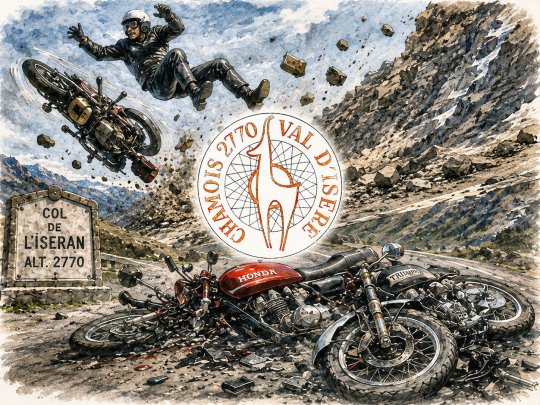
Too many accidents, too many lives lost. The Chamois Rally of 1969 would be remembered not only for its passion, but also for its tragedies.
One motorcyclist was found dead on a bend before Moûtiers.
A couple riding a BMW smashed head-on into a Peugeot 204 while crossing a level crossing, even though the car was travelling at only forty kilometres per hour and fully within its lane.
A rider carrying a passenger on a 500 Suzuki tore through the campsite at 110km/h; the young woman ended the rally in hospital.
On Sunday at midday, descending from the Col de l'Iseran, a 450 Honda and a Triumph Bonneville collided head-on.
Leaving Val-d'Isère on the road toward the Iseran, a Triumph became airborne over a bump, and its rider was killed in the crash.
Two young motorcyclists from Chambéry also lost their lives on the journey home.
Inside Europe’s open-air motorcycle show
If one had to sum up in a few words the variety of machines seen each year at the Chamois Rally, one of the best descriptions would surely be that it was a true retrospective of motorcycling — in terms of new models, old machines, and ingenious inventions alike.
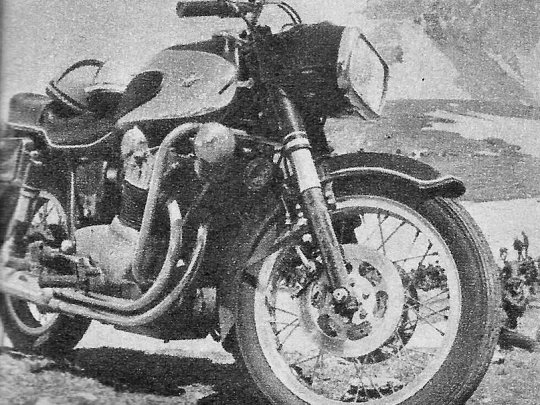
Seen at Chamois ’69, this new MV Agusta 750 S featured twin front disc brakes. Launched in 1969 as the sporting successor to the earlier 600cc tourer, it was produced in limited numbers and sold for nearly twice the price of comparable Japanese motorcycles.
In this vast improvised open-air motorcycle show, riders spent hours admiring and comparing every detail of the machines around them: handmade fairings, racing clip-ons, special exhausts, modified seats, custom paintwork, and countless mechanical tweaks reflecting the personality and ingenuity of their owners.
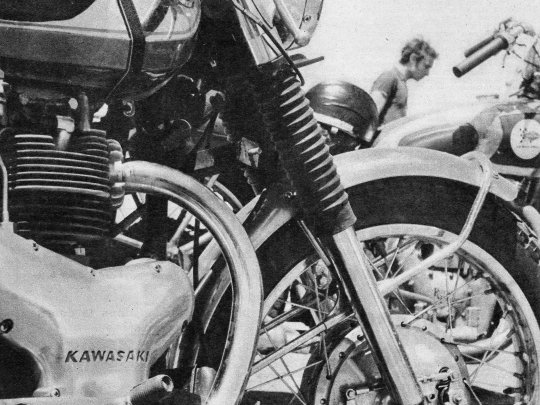
The most British-flavoured Japanese machine of the era.
Technical discussions spilled onto the pavements: engine capacity, compression ratios, acceleration, carburation — everyone spoke the same “mechanical Esperanto” that instantly brought strangers together.
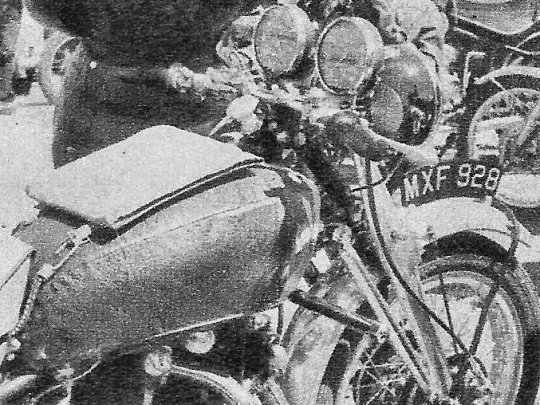
Registered MXF 928, what became of this venerable Vincent — with its distinctive girder fork and twin front brakes — that made the journey by road to Val-d’Isère in the summer of 1969?
Crowds were already gathering around the star machines of the rally.
Among the most admired were the new three-cylinder BSA, Triumph and Kawasaki models, a magnificent Vincent Black Shadow 1000cc, a 1925 Monet-Goyon, several already widespread Kawasaki 500s, and a beautifully preserved vintage Moto Guzzi.
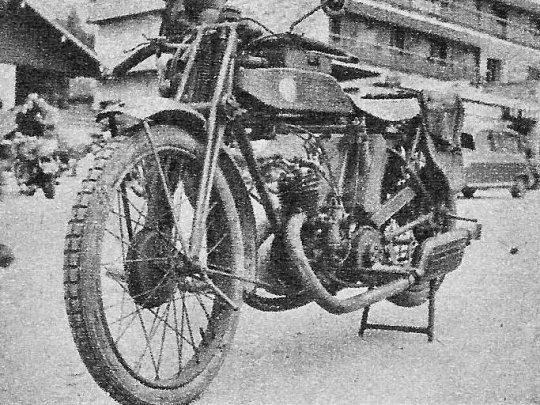
The 1925 Monet-Goyon 175cc Supersport seen at Val d’Isère. Claimed to reach a top speed of 90km/h, it tackled the climb to the Iseran pass valiantly on Sunday morning, despite its venerable age, alongside motorcycles far more modern than itself.
Some nevertheless regretted the absence of a Honda CB750 four-cylinder, which would undoubtedly have caused a sensation.
And then there were the monsters — foremost among them the astonishing Münch Mammut designed by German engineer Friedel Münch. Crowds surrounded it constantly throughout the rally.
At Chamois ’69, the Harley-Davidsons were the heavyweight kings of the rally — until the monstrous Münch Mammut showed up and stole the crown.
A true mechanical monster weighing 240 kilos and produced in only seven examples worldwide, fitted with a car engine delivering 84 horsepower and capable of more than 220km/h, the Münch Mammut belonged to Thierry Quentin, a twenty-six-year-old Parisian insurance broker who, for one weekend, became the most envied motorcyclist in France.
But the Chamois Rally also celebrated ingenious home-built creations and the most improbable mechanical curiosities. Among them was the extraordinary 1,200cc BMW-Volkswagen “bitza” sidecar outfit, entirely assembled by its famous owner, Jean‑Marie Debonneville, better known on the international motorcycle touring scene by the nickname “Le Druide.”
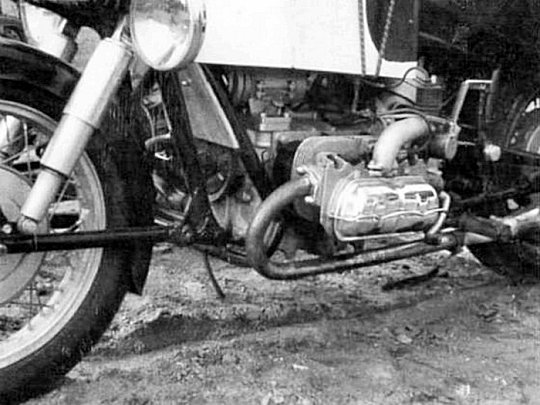
According to its builder, Jean-Marie Debonneville, the BMW-Volkswagen “bitza” outfit seen above — fitted with a Steib sidecar — could reach a top speed of 90mph.
Among the machines that inevitably drew attention was an MV Agusta extensively transformed into a café racer by an Italian rider with an almost obsessive sense of perfection.
Sharpened, lowered, and stripped down to the extreme, it looked as though it had come straight from a racing pit garage rather than the mountain roads leading to the Chamois Rally.
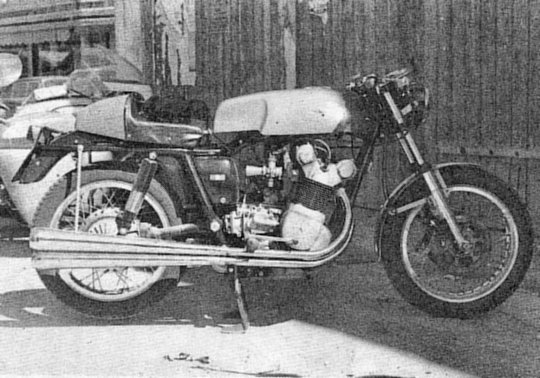
An MV Agusta transformed into a purebred café racer, combining Italian elegance with racing spirit.
Just a few steps away stood a remarkable custom-built Yamaha created by a young mechanic from Nice.
Very little remained of the original motorcycle apart from the engine, now fitted into a completely handmade chassis that was as lightweight as it was minimalist — a striking example of craftsmanship and ingenuity.
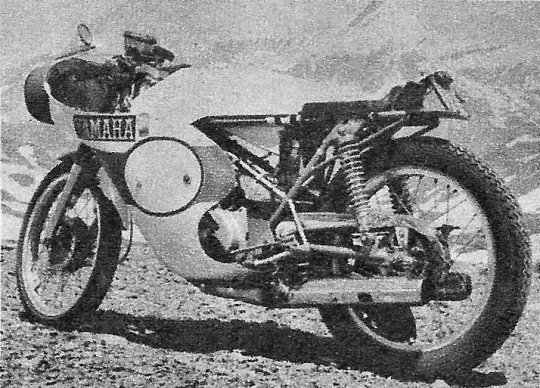
The custom Yamaha built by the young rider from Nice retained virtually nothing of the original machine apart from its engine. According to its owner, the motorcycle was capable of reaching a top speed of 140km/h.
Further along stood an antique Gnôme-et-Rhône from the 1940s, recalling the golden age of pre-war French motorcycling.
Born from the aviation industry, Gnôme-et-Rhône had earned a reputation for the strength and reliability of its motorcycles, with iconic models such as the CM2, XA, D5 and the famous X40, before its factories were requisitioned by the German occupation authorities in 1943.
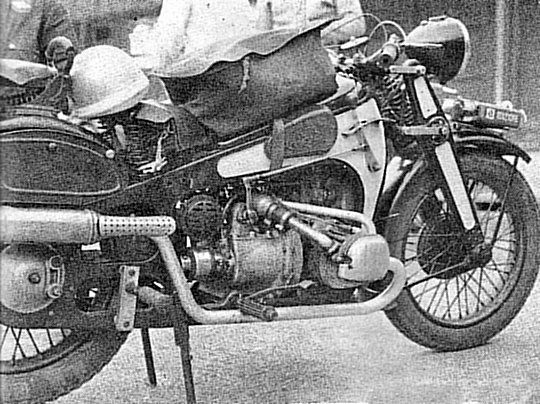
This Gnôme-et-Rhône seen at the 1969 Chamois Rally was fitted with a carburettor heating system designed to prevent icing at high altitude, as well as a splash lubrication system inherited from earlier mechanical designs.
Many examples of the Gnôme-et-Rhône AX2, used by the German army during the war, were later scattered across Europe.
Wild shows and mechanical madness
Improvised demonstrations were also part of the spectacle.
Here, a BMW sidecar outfit cornered with the chair wheel suspended half a metre above the ground. There, local riders on Bultaco machines performed wheelies for more than 150 metres, eager to show visitors from the lowlands that they too lived for two wheels — even when using only one of them.
There were even more improbable feats: a moped fitted with a sidecar managed to reach the summit of the pass thanks to the assistance of a second sidecar outfit pushing it through the steepest sections.
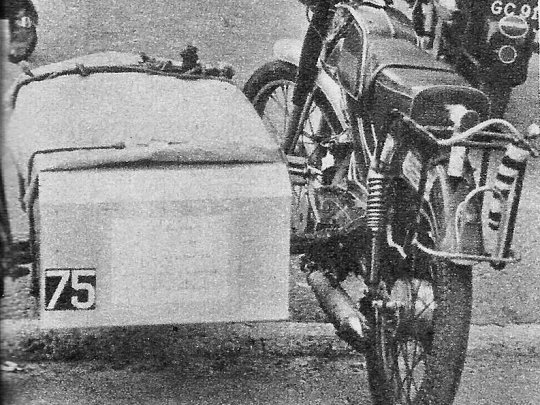
Even the smallest machines earned their place among the giants.
Another moped rider, whose frame had broken on the way up, repaired it with bolted metal plates before continuing the climb as though nothing had happened.
But perhaps the finest example of family passion for motorcycling came from a four-and-a-half-year-old child seated behind the handlebars of a large faired BMW, while his father, helping with the controls and pedals, communicated by walkie-talkie with his wife following behind on a 125 Honda.
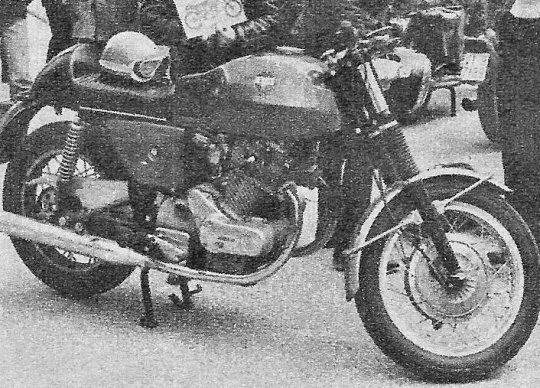
This 1969 Laverda 750 S seen in Val d’Isère was a powerful Italian café racer powered by a 744cc parallel twin producing around 60hp. Fast, heavy, and exceptionally robust, it could exceed 120mph and rival the finest British motorcycles of its era.
Riders naturally gathered by brand, nationality, or simply among friends. Harley-Davidson and especially Laverda owners formed tightly packed rows, the latter encouraged by the presence of French importer Gaby Couturier, who had arrived with an assistance van.
At the time, Couturier was the emblematic official importer of Laverda motorcycles in France. Based in Neuilly-sur-Seine, the Établissements Couturier played a major role in the distribution and promotion of the famous Laverda 750 SF twins and later models, leaving a lasting mark on the brand’s history in France.
Chaos at 2,700 Metres
On Sunday morning, shortly after sunrise, the wind and overcast skies of the previous day gave way to brilliant sunshine. The avenue leading to the cable cars was soon transformed into an immense sea of people and motorcycles.
Over a stretch three hundred metres long and fifteen metres wide, the asphalt completely vanished beneath rows of machines parked handlebar to handlebar.
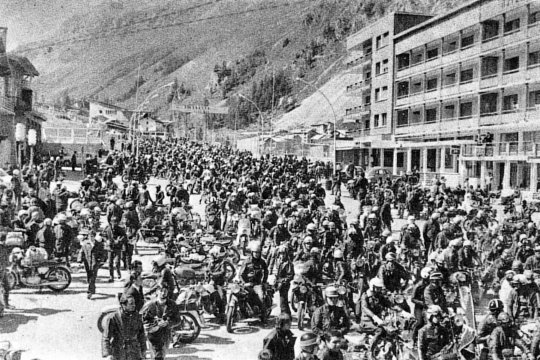
Moments before the departure for the Col de l’Iseran, the avenue beside the cable cars turns into a vast sea of nearly 3,000 motorcyclists. An impressive gathering stretching as far as the eye can see.
Then came the start of the parade toward the Col de l'Iseran, and the spectacle took on an almost unreal dimension.
In an uninterrupted roar of engines, Jean Murit and his wife, riding pillion, led the way, followed by thousands of motorcyclists slowly setting off along the mountain road.
The immense mechanical procession wound its way through the Alpine bends in an atmosphere that was both grandiose and improbable. Modern motorcycles, vintage machines, sidecars, and hand-built specials from across Europe all blended together in this climb toward the Iseran, creating a breathtaking scene unlike anything else in the history of motorcycling.
Jean Murit led the climb to the Iseran with his wife riding pillion, both gloriously helmet-free — a reminder that France’s mandatory helmet law for riders and passengers of motorized two-wheelers would not come into force until 1 July 1973.
At first scattered in small groups, the motorcyclists soon merged into an immense mechanical serpent several kilometres long, slowly winding its way through the hairpins toward the summit.
In places, the road turned into a monumental traffic jam: more than two thousand motorcycles stood immobilised for nearly two hours at the top of the pass.
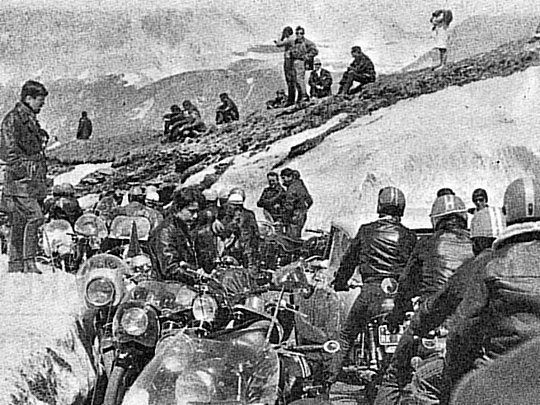
A traffic jam caused by motorcyclists — who would have believed it? Yet thousands of riders clogged the narrow, winding road to the Col de l’Iseran between towering snowbanks.
For unsuspecting holidaymakers who had come to the Alps to escape the traffic jams of the cities, only to discover an even greater one at 2,700 metres above sea level, the experience was quite a shock.
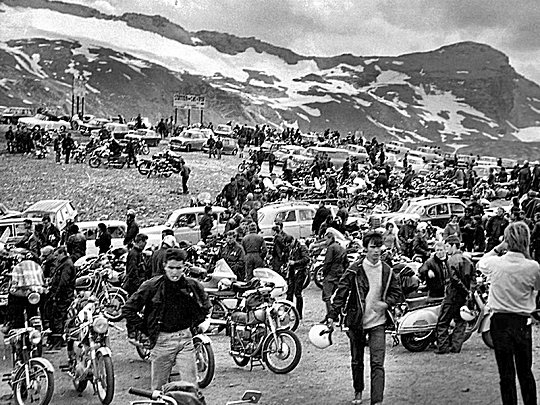
At 2,700 metres above sea level, the Rally transformed the high alpine pass of the Iseran into one of the largest motorcycle gatherings in Europe.
Holy water and two-stroke smoke
Up at the summit, beside the stone chapel of Notre-Dame-de-Toute-Prudence Chapel — built in 1939 by architect Maurice Novarina — Father Estève, a missionary priest from Lyon, carried out the traditional blessing of the motorcycles.
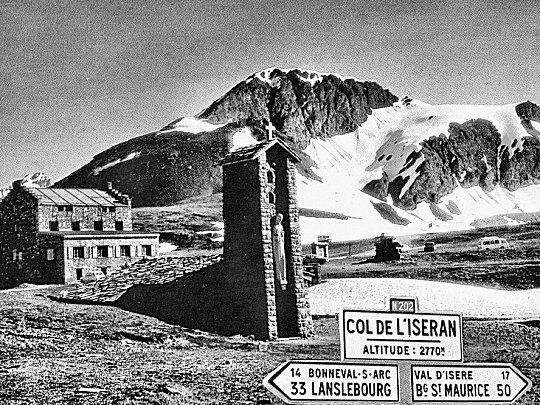
Located at an altitude of 2,764 metres, the chapel houses a statue of the Virgin created by sculptor Edgar Delvaux, carved from a single 4.15-metre block weighing five tonnes, watching over travellers and mountaineers crossing the Iseran Pass.
Yet despite the singular nature of the ceremony, it went almost unnoticed by the participants, many of whom were unaware it was even taking place. Barely a dozen people actually attended it.
At the summit, the off-road riders happily demonstrated to the road bikers that mountains were meant to be climbed — not merely ridden through.
Left: J.F. Colomb, a familiar face in French motocross competition during the late 1960s; right: a Bultaco Sherpa, somewhere above the laws of physics…
The Chamois lottery
Then came the descent back toward Val-d'Isère. Those facing the longest journeys packed up and left without waiting for the raffle draw, which once again offered a generous selection of valuable prizes.
The original participation ticket for the 1969 Chamois Rally. In the upper-right corner of the detachable left-hand stub appears the lucky number that — with odds of one in 2,800 — might just win you one of the prestigious raffle prizes listed on the reverse.
The traditional grand prize — a brand-new BMW R60 offered by BMW France — was won by Claude Boutillon from Maubeuge. The second prize, a Honda CB250 donated by Honda France, went to Jean-Louis Bastouli of Aix-en-Provence. The small Kawasaki S90 was won by Jean-Pierre Marténot from Dijon, while the Ital-Jet moped went to Patrick Chantelot of Épinay-sur-Seine.
Lady Luck also smiled upon our club, the MC Dragons, as the draw among 2,800 tickets rewarded two of its most distinguished members: Christian “Kiki” Blanchot, president of the Clermont-Ferrand mother chapter and holder of ticket number 551, along with Peter Pafalvi, president of the PAVECK section in Provins and then living in Nogent-sur-Seine, with ticket number 2484. Both won a free one-year subscription to the magazine Moto-Revue.
The silence after the storm
Those in no hurry to leave still took time to enjoy the local wine and mountain tome cheese before catching a few hours of restorative sleep after a sleepless night. They would set off again at dusk, riding until they found somewhere to sleep along the valleys or by the roadside. The motorcycles departed from Val-d'Isère one by one.
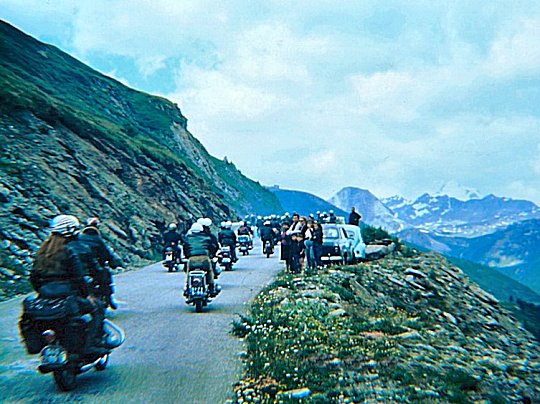
Motorcyclists winding through the Alps.
In a final thunder of engines and a few furious bursts of acceleration, the riders scattered in every direction, disappearing behind the mountains until the following year.
They carried with them the commemorative medal of the 1969 Chamois Rally — a modest token of belonging to that strange brotherhood of the road.
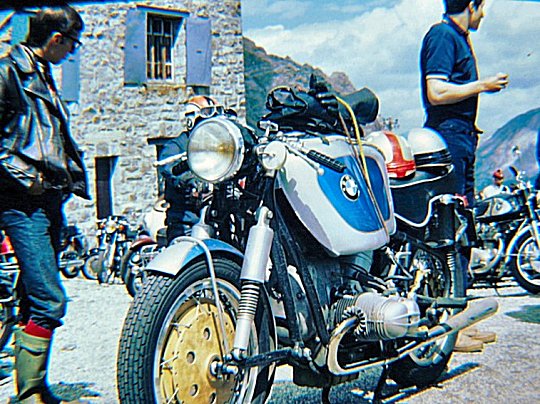
True memories, forged by the road, the mountains, and the brotherhood of riders.
But above all, they carried home far more than a medal: memories of hundreds of kilometres ridden through fatigue and cold, encounters made by chance at petrol stations and mountain passes, admired machines parked by the roadside, nights that were far too short, improvised campfires, and that immediate sense of brotherhood born between strangers sharing the same passion.
Beyond the roar of engines, the excesses, the accidents and the disorder, the 1969 Chamois Rally ultimately revealed an entire generation of motorcyclists searching for freedom, space, and recognition.
It was a brotherhood still poorly understood — sometimes unruly, often undisciplined — yet deeply united by a love of the road, mechanics, and travel.
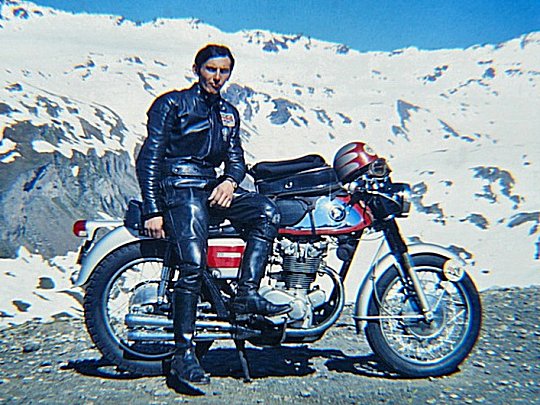
One rider among hundreds — yet every rider carried a story of his own.
Little by little, Val-d'Isère recovered the muted calm of an Alpine resort.
The avenues emptied, the smells of petrol and hot oil faded into the cool mountain air, and the town suddenly became almost melancholic once again. At last, residents and holidaymakers could enjoy peaceful nights.
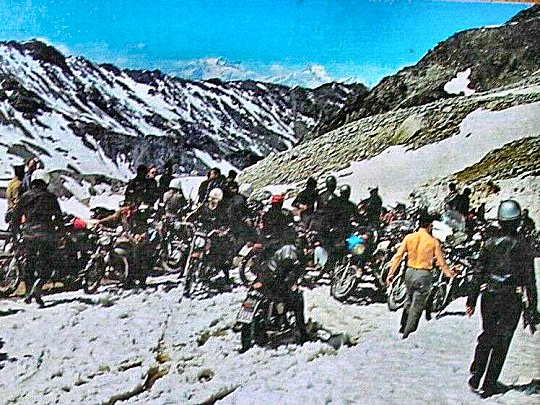
When the last motorcycles vanished beyond the Alpine passes, a legend remained behind.
For one weekend in July 1969, Val d’Isère ceased to be a simple mountain resort and became the fleeting capital of a nomadic people living to the rhythm of engines.
And when the last motorcycles disappeared beyond the mountain passes, the 1969 Chamois Rally entered forever into the collective memory of motorcycle rally enthusiasts — one of those rare moments when a passion ceases to be a mere pastime and becomes a true way of life.
Text: Jean-Francois Helias
Photographs: Gilles Gaudechoux, Jean-Francois Helias