Chamois 1969
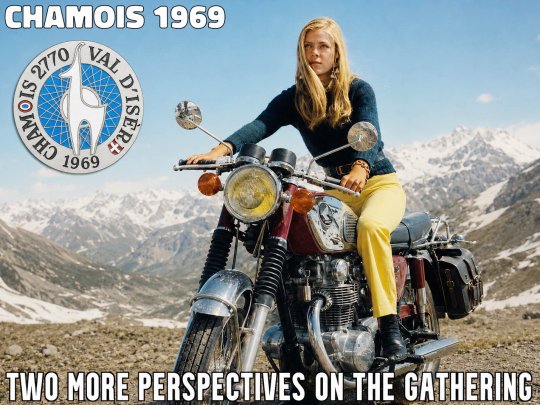
Beyond the romanticized images of carefree motorcycling, the 1969 Chamois gathering also revealed a far darker reality. Behind the camaraderie of this legendary rally, its majestic mountain passes and the roar of powerful machines, lay an era in which the passion for motorcycles was often lived without limits — sometimes at the cost of human tragedy.
The Alpine roads around Val d’Isère became the stage for a series of devastating accidents that left a lasting impression on all who witnessed them.
Among those witnesses was Henri Brun, a participant in the event and a clear-eyed observer of what unfolded there.
In an article published at the time in a specialized motorcycle magazine, Brun delivered a rare, raw, and deeply sincere testimony. His account does far more than recount the accidents that occurred during the 1969 Chamois: it seeks to understand their causes, examines the mindset of the motorcyclists of his era, and casts an uncompromising eye upon a generation captivated by speed, performance, and the spirit of competition.
Written , his words now stand as a valuable historical document. They reflect one of the major issues facing French motorcycling in the late 1960s: the arrival of increasingly powerful motorcycles in the hands of often inexperienced young riders, at a time when road safety awareness was still in its infancy.
Yet beyond their historical significance, these lines retain a striking modern relevance. They remind us that the passion for motorcycling also demands discipline, humility, and a clear awareness of danger.
In the interest of authenticity, and to offer readers the most faithful possible insight into this remarkable 1969 gathering, I have chosen to reproduce here a substantial excerpt from Henri Brun’s text.
This testimony, entitled “Stop the Massacre!” is at once moving, critical, and profoundly human. It sheds light on another side of the Chamois: that of a mechanical celebration whose exhilaration could, at times, turn into tragedy.
Jean-Francois Helias
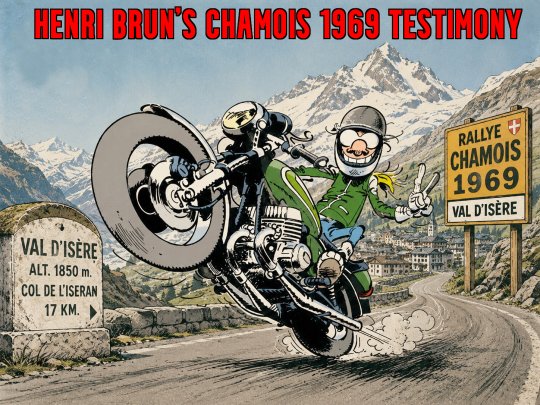
There should be no accidents in motorcycling, and yet, after everything I witnessed at the 1969 Chamois, I find myself wondering how there were not even more.
Imagine, at over 100 kilometres an hour, groups of twenty, thirty, sometimes fifty motorcycles riding in packs, two or three abreast, less than a meter apart from one another.
Imagine the same swarm of furious wasps on a holiday weekend afternoon, overtaking, carving through bends, racing each other along crowded roads among vacationers sealed inside their four-wheeled coffins and bewildered truck drivers.
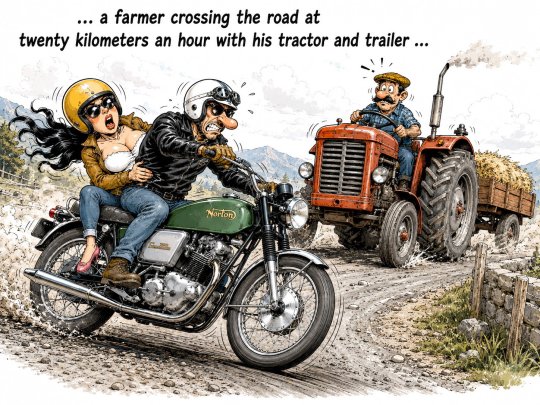
Then imagine a patch of gravel in a corner, a farmer crossing the road at twenty kilometres an hour with his tractor and trailer, or a motorist pulling out without looking behind him.
And then people act surprised, when tragedy inevitably strikes, that motorcyclists are treated as the poor relations of motor-sport; surprised by the relentless determination with which law enforcement applies even the smallest traffic regulations to riders. People are astonished — but do we truly have the right to be?
The problem has two origins. First of all, young people today enjoy an enormous degree of freedom. To attend the Chamois, one must leave home for at least three days, and many riders under twenty manage to persuade parents who are more or less understanding.
At the same time, they have far more money at their disposal, and it is not uncommon to see seventeen or eighteen-year-olds astride formidable 350cc or 500cc machines.
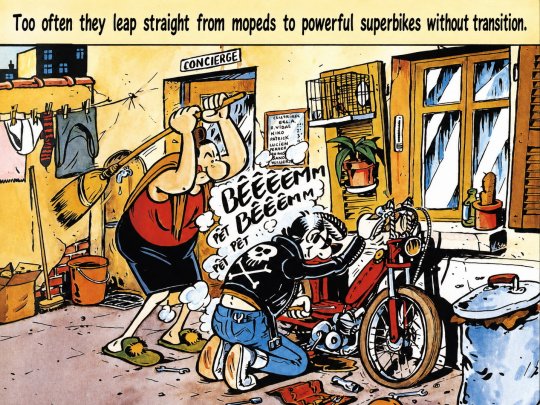
More serious still, many no longer progress gradually through smaller motorcycles as part of their apprenticeship. Too often they leap straight from mopeds to powerful superbikes without transition.
The trouble is that at that age we are all champions, and the slightest word of caution earns only a contemptuous glance, weighed down by thoughts of modern progress and the supposed backwardness of the one offering advice.
Yet it is impossible to ride safely for hundreds of kilometres on a large-capacity motorcycle capable of covering the standing kilometre in twenty-eight or twenty-nine seconds, reaching 180km/h or more, and weighing close to 200 kilograms, without long experience and without respecting the most elementary rules of prudence.
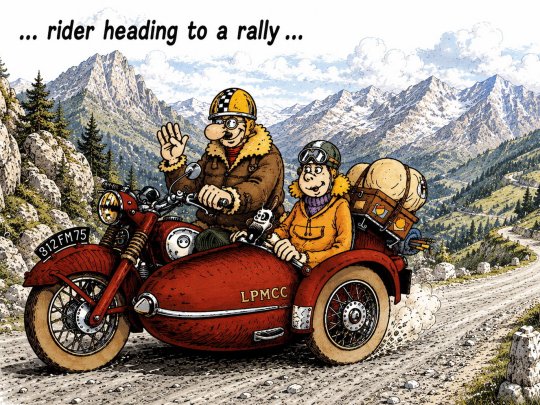
The root of the problem also lies in the mindset of the rider heading to a rally.
He is often accompanied by friends, but even when alone he is convinced he is faster than everyone else — and determined to prove it.
How can he resist blasting past an entire group already riding hard, certain beyond question that his own skill surpasses theirs?
How can he resist showing that he can take every bend twenty kilometres an hour faster, simply so others may say he is a real ace?
This spirit of competition, which takes hold long before the final hundred kilometres and continues throughout the entire gathering on heavily trafficked roads, all too often pushes riders beyond their limits.
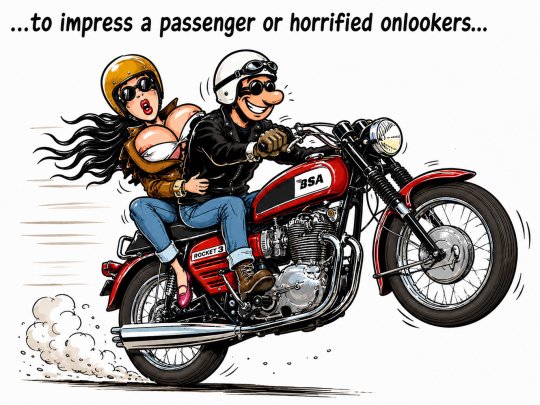
They take risks, commit reckless acts, flirt constantly with disaster — all to overtake a friend and prove who is best, to impress a passenger or horrified onlookers, or simply to maintain an ‘average speed.’
The solution to both problems is ultimately the same: an effort of will, a moment of awareness of which all motorcyclists are capable, and which most, fortunately, display in everyday riding.
Motorcycling is above all a discipline. There are circuits, hill climbs, motocross tracks, and quiet country roads where those who wish to race — or simply experience the thrill of speed — may express their talent freely.
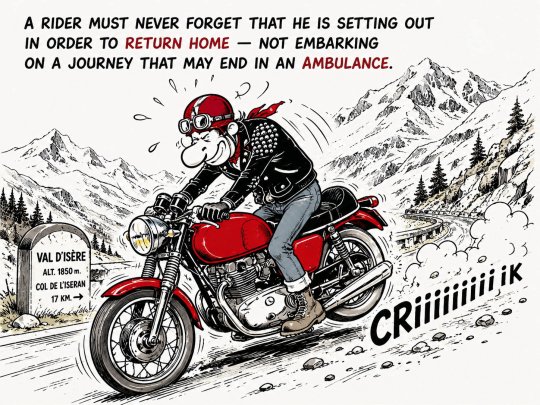
But when it comes to a rally, the touring motorcyclist’s mindset must change completely. A rider must never forget that he is setting out in order to return home — not embarking on a journey that may end in an ambulance.
The road in general, and a gathering such as the Chamois in particular, demand respect: respect for oneself and for one’s machine, awareness of one’s limits, the determination always to remain within them, and above all the composure required to resist the temptation of showing off.
Henri Brun
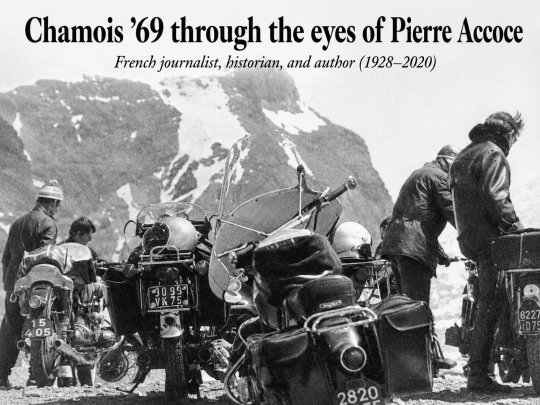
In a completely different vein, barely a week after the rally, an article entitled “The Great Gathering of the Peaceful Bikers” appeared in the 21 July 1969 issue of L’Express. Founded in 1953, the Paris-based weekly — then considered centrist to liberal-conservative — was the first French news magazine modelled on major American publications such as Time and Newsweek.
And so our Chamois — along with the entire motorcycling community that had long been viewed with suspicion — found itself thrust into the national spotlight. Until then, participants were often seen as outsiders: leather-clad, noisy men living beyond conventional social codes, and sometimes unfairly associated with the image of the blousons noirs, the feared “black-jacket” youth gangs of the era.
The very fact that a publication as influential as L’Express devoted an article to the gathering showed that the Chamois had outgrown the confines of a simple enthusiasts’ meeting to become a genuine social phenomenon.
Published in the magazine’s Mœurs (“Society & Lifestyles”) section, the article was written by Pierre Accoce, one of the most respected names in French journalism. A journalist, historian, and prolific author, he was particularly renowned for his work on espionage, the Second World War, and the private health of political leaders.
I very much doubt, however, that he made the ride to Val-d’Isère himself to truly take the pulse of the rally, absorb its atmosphere, and experience every moment firsthand in order to write about it from within. Still, he managed to gather more than enough material — it was well known that he maintained close ties with the SDECE, the French intelligence services — to produce the article reproduced below.
Everyone will form their own opinion of the piece. Yet from a historical standpoint, it remains another valuable testimony to the 1969 edition of the Chamois, and as such fully deserves its place in this collection of articles devoted to the event.
Jean-Francois Helias
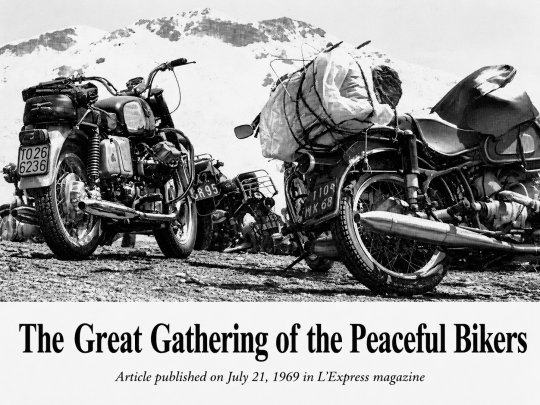
“There’ll be 1,500 of them — perhaps 2,000…”
The forecasts were blown apart. The other weekend, 3,300 were counted in Val-d'Isère, astride 2,800 machines, swathed in leather and helmeted in fibreglass, enveloped in a shimmering haze of exhaust smoke. It was the fifth Chamois Rally, one of the largest motorcycle gatherings in the world.
A strange tribe. They had come in waves, from France and fifteen other countries — Germany, Switzerland, Sweden, even New Zealand and the United States — yet they shared the same customs. Nothing interested them but their mounts. When they were not talking, in their mechanical Esperanto, of engine displacement, acceleration, and compression ratios, they would pull out their tool kits, strip machines down, scrub them clean, rebuild them, oil them, and lavish affection on them.
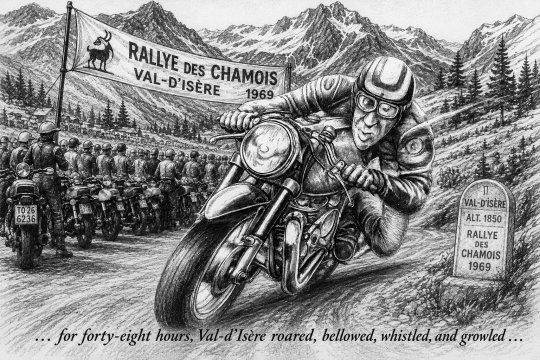
They lived on potato chips and cured sausage, sleeping under canvas. They had not come as tourists, but as pilgrims in search of a church. They compared their steeds and put them through their paces on the steep avenue climbing toward the cable cars. For forty-eight hours, Val-d'Isère roared, bellowed, hissed, and snarled.
Fiery or enigmatic
The intoxication first seized the local children. They scrambled onto the back of any machine whose rider would take them. Then the contagion spread to Jean-Claude Killy, home on holiday with his family since July 10.
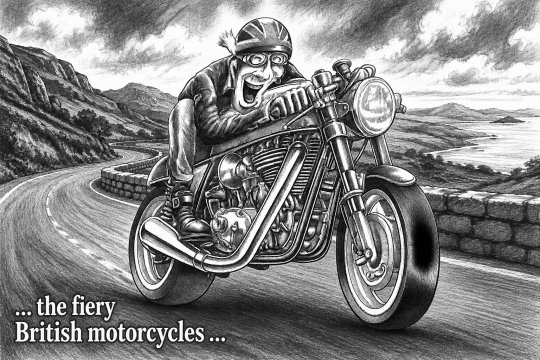
Abandoning his Bultaco — a spirited Spanish machine stripped of all accessories, which he rode hard in motocross — he began courting the smoky German bikes and the fiery British ones, before finally succumbing to the enigmatic Japanese machines.
And whenever the undisputed star of the gathering swept past — a machine called Mammoth, the extravagant brainchild of the German engineer Friedel Münch — the crowd held its breath. Imagine it: Mammoth weighed 240 kilos and existed in only seven examples worldwide, no two alike. A car engine mounted on two wheels: 84 horsepower and a top speed of 222 kilometres an hour. The monster parading through Val-d'Isère belonged to Thierry Quentin, a twenty-six-year-old Parisian insurance broker — the happiest motorcyclist in France.
“It was because all the others were so far from happy that we launched the Chamois Rally in 1965,” explained M. de Seynes. “To give them back their confidence, to show them they are not outcasts. Arrive at a grand hotel or a fine restaurant on a motorcycle and you’ll understand. Everywhere, people hate the knights of the road and the leather they wear. They frighten people.”
Blessing ceremony
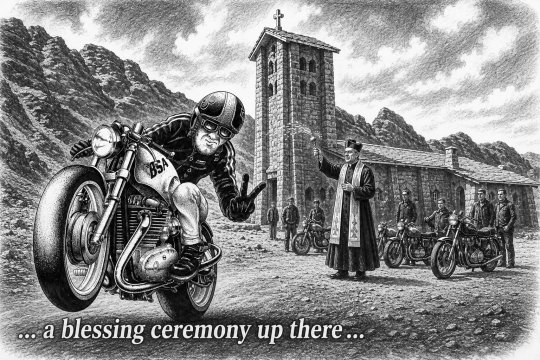
The 3,300 fanatics at Val-d'Isère were no symbols of evil. They had left their chains on their motorcycles. There was neither fighting nor misconduct. Gathered together, they turned a simple rendezvous into a spontaneous festival: a herd-like ride up to the Col de l'Iseran, a blessing up there from Father Estève, a missionary from Lyon, and a raffle with — naturally — a motorcycle as the grand prize.
Who were they then — these youths and grown men, these labourers and executives, those who had come to Val-d'Isère on sputtering mopeds and those piloting machines worth 20,000 francs, preceded by their wives at the wheel of a Chevrolet?
“Loners. Individualists,” replied Thierry Quentin. “I know them — I insure most of them. Modern man needs to assert his virility. Some do it on motorcycles; they handle them as they would a horse. They’re harder to control than a car, and the slightest mistake is unforgiving. Deep down, they are above all proud men. A clan. People who reject conformity.”
A motorcycle, indeed, is not merely a machine: it is a sign. The motorcyclist sees himself as an exceptional being, yet refuses to become an outlaw — or even an outcast from the world. That is what the roaring carnival of Val-d'Isère was for: to help the rider overcome his contradictions and lay his demons to rest.
Pierre Accoce