Chamois 1972
When technology lets you down
The programme planned for the weekend was particularly ambitious.
Everything had been put in place to make this eighth edition a truly memorable spectacle. Radio Monte-Carlo had erected a stage to host entertainment, competitions and live broadcasts throughout the rally.
The traditional raffle, once again generously endowed, promised a host of valuable prizes, while several well-known performers were scheduled to appear over the weekend, providing participants with an entertainment programme worthy of an event of this magnitude.
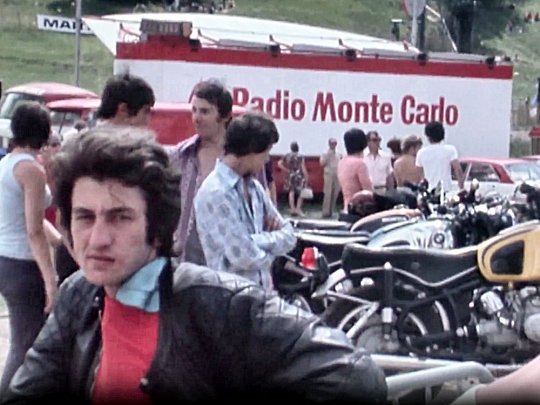
Before the storms brought everything to a halt, Radio Monte-Carlo's impressive mobile stage stood ready to host live broadcasts, games and performances by several leading French entertainers.
Throughout the weekend, the announcers continuously broadcast messages helping riders find their friends, locate spare parts, or simply reunite amid the vastness of the rally.
Jean Murit had also set up an emergency repair workshop, while Honda, BMW and Kawasaki had dispatched support vehicles and teams of mechanics, who were soon kept busy dealing with the many breakdowns..
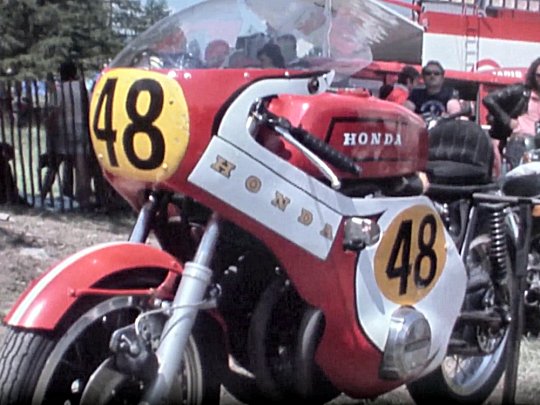
The Honda 750 Daytona on display at the Honda France stand.
Everything seemed to be running perfectly... until the storm turned the weekend upside down.
The torrential rain quickly overwhelmed the electrical installations. Water seeped into the system, causing a succession of short circuits, and every attempt to restore the power ended the same way — the fuses tripped almost immediately.
Even more worrying, anyone who touched the metal parts of the podium received an electric shock.
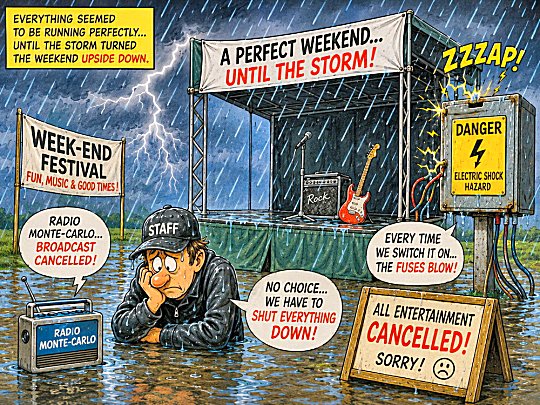
Mother Nature pulled the plug... literally.
Under such conditions, any form of entertainment became impossible, leaving the organisers with no choice but to cancel Radio Monte-Carlo's live broadcasts, along with the programme of scheduled performances.
The announced appearance of Johnny Hallyday, the undisputed icon of French rock and one of the country's most popular entertainers, had generated enormous excitement among the participants. Dubbed by the American press "the French Elvis Presley," he was undoubtedly the star attraction of the weekend.
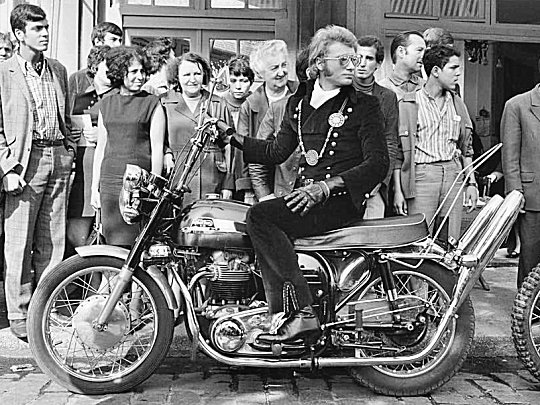
A lifelong motorcyclist, Johnny Hallyday is pictured here on his customised Norton Atlas 750, bought new in Paris in late 1966 and modified by renowned French motorcycle builder Maurice Combalbert.
But fate had other plans: the long-awaited concert never took place.
A minority tarnishes the reputation of the many
The disappointment was equal to the expectations this edition had generated. For hours, participants had endured exceptionally severe weather. One by one, the planned entertainments had been cancelled, power failures were becoming increasingly frequent, the eagerly awaited Johnny Hallyday concert would not take place, and after hours of relentless rain and countless drinks, tempers began to fray.
In such an atmosphere of frustration and exhaustion, it took only a handful of hot-headed individuals to cross the line. Taking advantage of the confusion, they stormed the stage and, seizing a loudhailer, whipped up the crowd with a series of provocative slogans, including the now infamous:
"We're going to smash everything!"
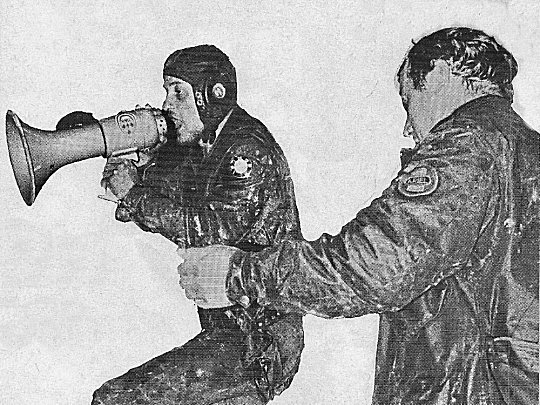
Two disgruntled participants caught red-handed by a press photographer. Their actions would leave a lasting mark on the reputation of the final Chamois Rally.
Fortunately, the Radio Monte-Carlo presenters showed remarkable composure. Despite an atmosphere that had become increasingly tense, they succeeded in calming the crowd and preventing the situation from escalating any further.
The atmosphere quickly became highly charged. Convinced that Honoré Bonnet was responsible for the debacle, a number of angry participants began searching for him throughout the resort. As tensions continued to rise, he was forced to take refuge. The local authorities called in the Gendarmerie's motorcycle unit to ensure his protection and restore order.
Nevertheless, the unprecedented turnout, the euphoria it had generated, and the excesses that followed resulted in an unprecedented number of accidents. The emergency services were soon overwhelmed, to the point that the hospital in Gap reached full capacity.
In the space of just a few hours, months of planning, organisation and hard work had been swept away. What was meant to be the highlight of this eighth edition had turned into a profound disappointment. More than a simple setback, these events left a lasting mark on all those who witnessed them and would forever become part of the history of the Chamois Rally.
After each downpour, campfires became essential. Soaked riders gathered around the flames, drying their clothes and boots while waiting for the weather to improve.
Yet it was this episode, far more than the rally itself, that would go on to shape the lasting reputation of the 1972 Chamois.
With the benefit of hindsight, however, it would be profoundly unfair to define this final edition solely by the actions of a handful of hot-headed individuals.
As is so often the case at large public gatherings, a particularly vocal minority ended up monopolising attention, overshadowing the exemplary conduct of the many thousands of motorcyclists who had come to Pra‑Loup in an entirely different spirit: to share, for one weekend, their common passion for motorcycling in an atmosphere of camaraderie and freedom.
The local residents were won over
Even before the first riders arrived, a certain sense of apprehension hung over Pra‑Loup. Rumours spoke of an invasion of "Blousons Noirs" — the long-haired youths whom the media of the day routinely portrayed as unruly, noisy and uncontrollable. Many feared that the resort would descend into chaos for the entire weekend.
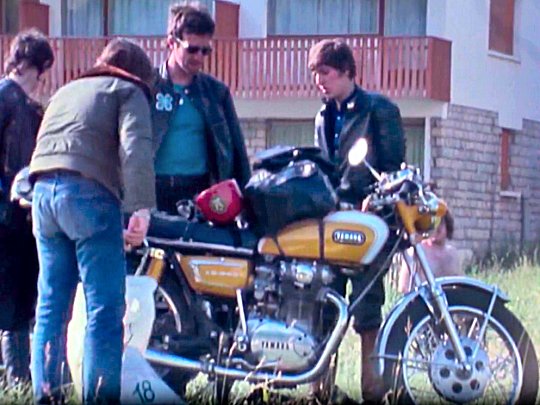
Many residents expected trouble when thousands of motorcyclists descended on Pra‑Loup. In the end, the fears proved largely unfounded.
Fortunately, the reality proved to be very different. When the storms broke and thousands of motorcyclists were left soaked to the skin, many local residents spontaneously opened the doors of their barns, sheds and even village halls, offering shelter and a little warmth to these rain-soaked travellers. This remarkable display of generosity was unanimously praised by the participants, who never forgot the warm welcome they received despite the difficult circumstances.
By the end of the rally, despite the mud, the organisational difficulties and a handful of isolated incidents, many local residents readily admitted that their fears had been unfounded. They were pleasantly surprised by the courtesy and exemplary behaviour of the overwhelming majority of the riders, whose conduct had thoroughly dispelled the stereotypes that had preceded them.
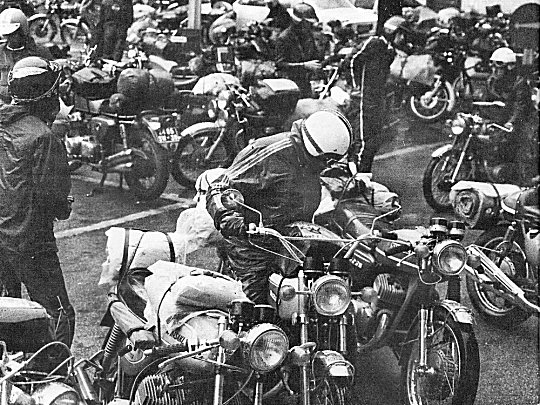
Despite the exceptional circumstances, the overwhelming majority of participants behaved with courtesy and respect, earning the appreciation of many Pra‑Loup residents.
Of course, the campsites had to be restored, the camping areas cleaned up, and the inevitable damage caused by the passage of nearly ten thousand participants repaired. But contrary to the doomsday predictions made by some, Pra‑Loup was never "ransacked."
With the benefit of hindsight, that perhaps sums up the true story of the 1972 Chamois: the spectacular excesses of an insignificant minority left such a lasting impression that they overshadowed the exemplary conduct of the thousands of enthusiasts who had come to share, in a spirit of friendship and brotherhood, their love of motorcycles and the mountains.
The great motorcycle family
Beyond the storms, the organisational difficulties and the controversies, the Chamois remained above all an extraordinary human adventure. For one unforgettable weekend, thousands of motorcyclists from every corner of France converged on the Alps, united by a shared passion that transcended differences of age, social background and even engine size.
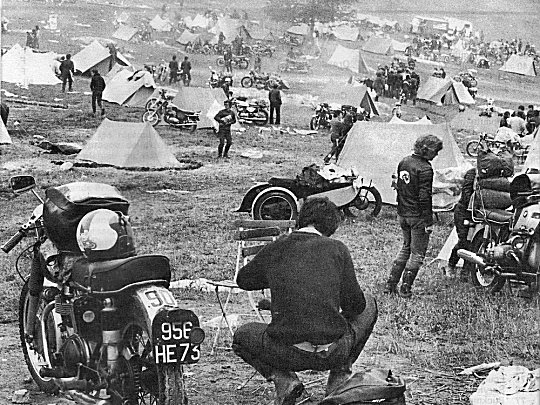
Beyond the storms, the mud and the controversies, the Chamois remained above all a remarkable human adventure, bringing together thousands of riders from every walk of life, united by a common passion.
Amid this immense tide of anonymous rallyists, many of whom had travelled hundreds of kilometres to reach Pra‑Loup, it was not unusual to encounter some of the greatest names in French motorcycling.
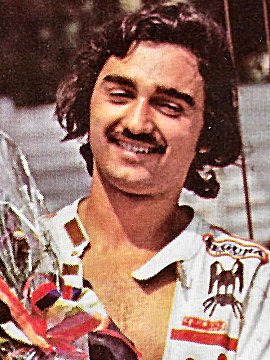
Michel Rougerie on the podium at Imola in 1974 after securing third place in the 350cc Grand Prix. Winner: Giacomo Agostini (Yamaha).
Among the most prominent was Michel Rougerie, then widely regarded as the brightest young hope of French motorcycle road racing.
A few years later, he would become runner-up in the 250cc World Championship, win three Grands Prix, and fully confirm his immense talent before being tragically killed in a racing accident in 1981. Yet even at the age of just nineteen, he had already made a name for himself by winning the legendary 1969 Bol d'Or.
Off-road enthusiasts also had the privilege of meeting two other legends: Claude Peugeot, whose spectacular trial riding demonstrations on the slopes of Pra‑Loup captivated the crowds, and Guy Totems, then reigning French Trial Champion.
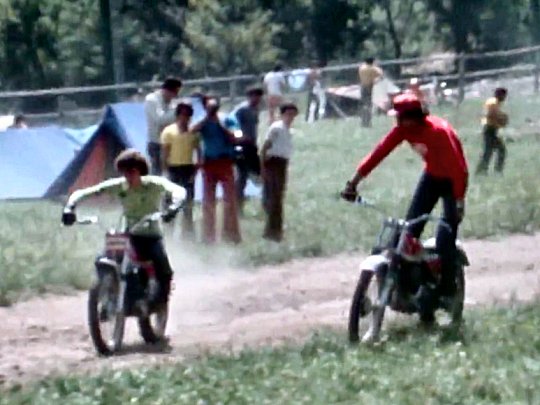
Whether at Val d'Isère or Pra‑Loup, the mountains always attracted off-road enthusiasts and their machines.
The Chamois also reflected a motorcycling world in the midst of change. Among the participants was Christiane Kibler, one of the first women to compete in the French Trial Championship at a time when the sport remained an almost exclusively male preserve. Having ridden all the way from Mulhouse on her Honda 500, she embodied a new generation of women who were now taking the handlebars of their own motorcycles, far removed from the traditional role of pillion passenger.
Another familiar face was Alain Renouf, one of France's leading Norton Commando hill-climb specialists. Future winner of the inaugural Tour de France Moto in 1973, he hosted several games and competitions from the main stage throughout the weekend. Like Michel Rougerie, he too would meet a tragic fate, losing his life in competition just two years later.
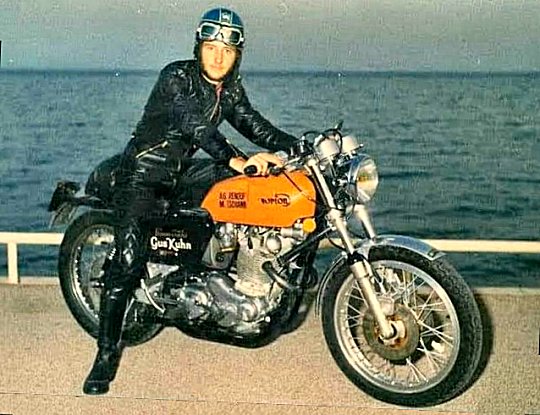
Alain Renouf earned a formidable reputation as one of France's leading hill-climb specialists, achieving numerous victories aboard his powerful Norton Commando motorcycles.
But the true heroes of the Chamois were not only the champions.
They were also the thousands of ordinary riders for whom the journey mattered just as much as the destination.
How could one fail to admire the fifteen-year-old boy who had left Bayonne on nothing more than a humble moped, riding for twenty-two hours to reach Pra‑Loup? He alone embodied the true spirit of the Chamois: courage, perseverance, and a passion measured neither by the power of a motorcycle nor by the prestige of a racing record.
The motorcycle park itself offered a remarkable sight. From modest 50cc mopeds to imposing 1,200cc machines, every category was represented.
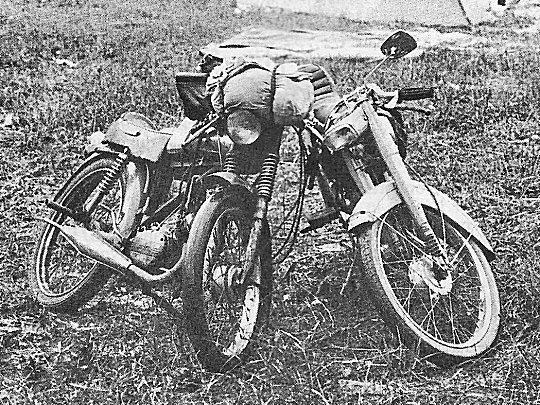
Small in engine size but immense in spirit, mopeds like these embodied the true philosophy of the Chamois: anyone with enough determination could make the journey.
Even more remarkable was the growing number of women who had made the journey on motorcycles of their own. In the early 1970s, this was far from insignificant: it heralded the emergence of a more inclusive motorcycling culture, where passion was no longer the preserve of men alone.
The Tour de France: Yet another obstacle
As if the rallyists had not already suffered enough from the appalling weather, another major event further complicated their weekend: the passage of the Tour de France.
In July 1972, La Grande Boucle was also crossing the Alps. On Friday 14 July, the riders had finished the stage at Orcières-Merlette, while the following day was devoted to the traditional rest day before the race resumed.
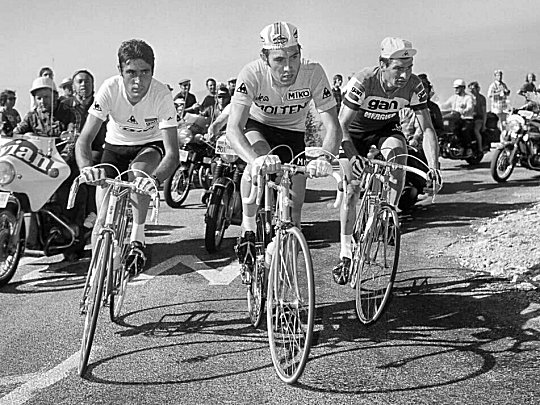
1972 Tour de France – Eddy Merckx (centre), in his iconic Molteni jersey, leads Luis Ocaña (left) and Raymond Poulidor (right), the beloved darling of the French public, during one of the Tour's epic mountain climbs. Merckx would ultimately claim overall victory.
The presence of the Tour's publicity caravan, team convoys, support vehicles, police units and tens of thousands of spectators disrupted traffic throughout the region. Many roads were placed under traffic restrictions or temporarily closed to ensure the smooth running of the race.
The Chamois Rally participants felt the effects immediately. The roads leading to Barcelonnette and then on to Pra‑Loup quickly became heavily congested, resulting in endless traffic jams and hours of delay. For many riders, already exhausted by the appalling weather and, in some cases, after journeys of eight or nine hundred kilometres, these delays made what had already been a demanding trip feel more like a true endurance test.
A victim of its own success
With more than half a century of hindsight, one conclusion is inescapable: Pra‑Loup was in no way responsible for the disappearance of the Chamois Rally.
Quite the contrary.
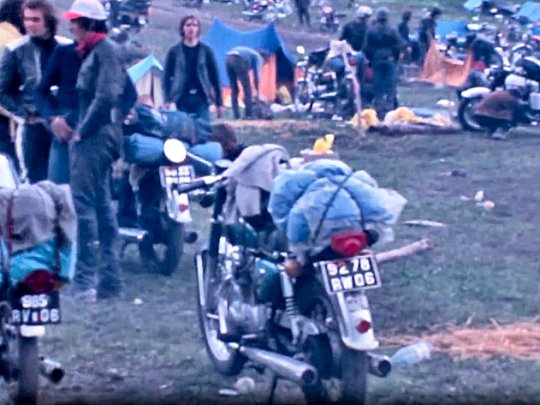
Packed for a weekend. Staying for the apocalypse.
By agreeing, at very short notice, to host Europe's largest summer motorcycle rally, Honoré Bonnet accepted a challenge that few resort directors would have dared to take on.
Working alongside Jean Murit and their respective teams, he marshalled every available resource to provide the thousands of participants with a welcome worthy of the Chamois' reputation. Despite their remarkable commitment and an organisation carried out under exceptionally difficult circumstances, the events would ultimately slip beyond their control.
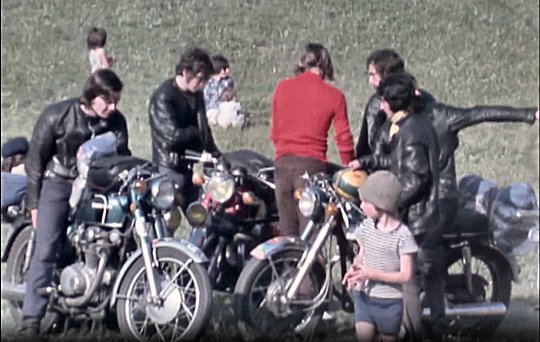
No Wi-Fi. No GPS. Just motorcycles, maps... and endless debates.
It would be equally simplistic to blame the disappearance of the Chamois solely on the whims of the weather.
The exceptionally violent storms that swept across Pra‑Loup certainly turned what had promised to be a memorable weekend into a severe ordeal. But they were not the cause of the rally's demise; they merely exposed its limitations.
By 1972, the Chamois Rally had simply outgrown itself. With close to 10,000 participants, it had become Europe's largest summer motorcycle rally. A gathering of such magnitude now exceeded the hosting and organisational capabilities of a resort facing an event of this scale for the very first time.
In reality, the Chamois became the victim of its own success.
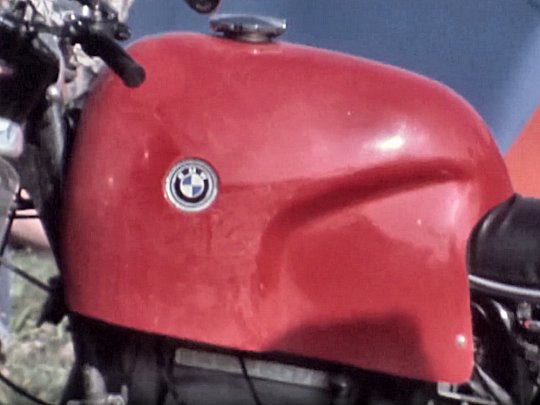
Designed by engineers. Approved by bikers.
Its extraordinary popularity had gradually transformed a gathering of enthusiasts into a truly colossal event, whose growth had ultimately outstripped the human, material and logistical resources of its organisers. By 1972, it was no longer simply a motorcycle rally; it had become a social phenomenon.
When the few eclipse the many
And yet...
It would be a profound mistake to remember this final edition only for the rain, the mud, the electrical failures, or the excesses of a handful of hot-headed troublemakers.
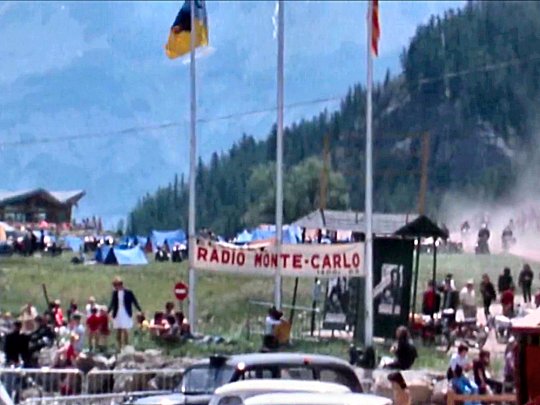
A mountain meadow transformed into France's biggest biker village.
Those troublemakers did indeed exist, and they undoubtedly contributed to creating an atmosphere of tension that left a lasting impression. Their behaviour was unquestionably regrettable and ran completely contrary to the values of respect, solidarity and camaraderie that had always defined the spirit of the Chamois.
Yet they represented only a tiny fraction of the nearly 10,000 motorcyclists gathered at Pra‑Loup. As is so often the case, the highly visible actions of a few individuals were enough to overshadow the exemplary conduct of the many thousands of other rallyists, whose sole purpose was to share their passion for motorcycling and the mountains.
This interpretation is, moreover, supported by the testimony of Honoré Bonnet himself. In the closing minutes of a remarkable documentary on the 1972 Chamois Rally, produced by a collective of seven amateur film-makers, he offers a lucid and deeply thoughtful assessment of the events that marked this final edition.
institut-audiovisuel.mc/medias/rassemblement-de-motards-a-Pra-Loup/
The legacy of the Chamois
The true legacy of the Chamois lies elsewhere.
It lives on in the thousands of motorcyclists who, year after year, crossed France to reach the Alps. In the friendships forged around a campfire. In the roads travelled beneath sunshine, rain, and sometimes even snow. In the spontaneous solidarity between riders. And in that unique spirit of freedom that made them forget the miles, the fatigue, and the hardships of the journey.
For eight remarkable years, the Chamois embodied, better than any other gathering, the very soul of French motorcycling during the 1960s and the early 1970s.
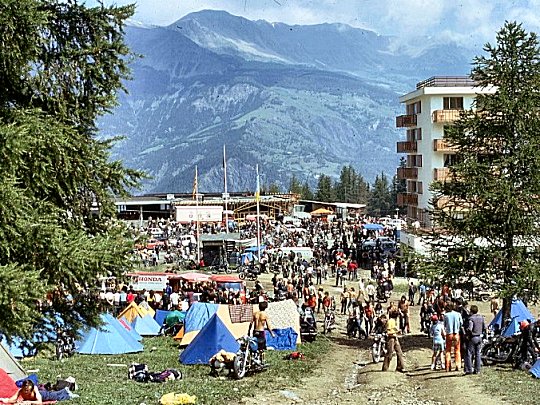
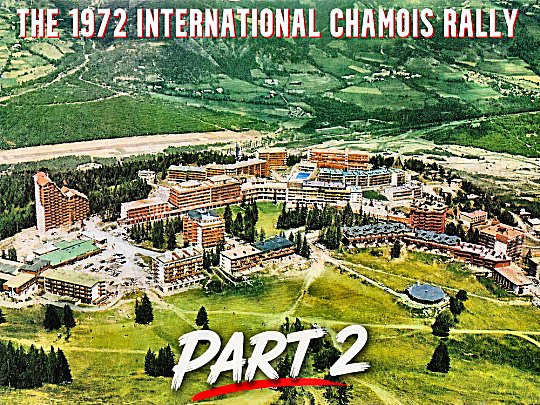
General view of the 1972 Chamois Rally at Pra‑Loup, captured just a few hours before the storms brutally transformed a joyful celebration into a profound disappointment.
The engines fell silent at Pra‑Loup in July 1972.
But the spirit of the Chamois lives on whenever a former participant recalls those unforgettable weekends in the heart of the Alps, when the journey mattered just as much as the destination.
For great gatherings never truly disappear. They become legends.
And the Chamois is surely one of the finest in the history of French motorcycling.
Text: Jean-Francois Helias
Photos: Gilles Gaudechoux & J.F Helias
ADDENDUM
My Chamois 1972 – A Personal Recollection
By Gilles Gaudechoux
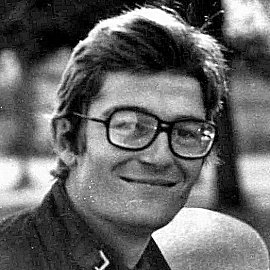
When it came to the 1972 Chamois Rally, I was absolutely determined to attend what had already become a legendary gathering.
I left Romorantin before dawn — in fact, it was still completely dark, something I remember vividly — aboard my Yamaha 350 R5, loaded like a pack mule. Nearly 700 kilometres of French national roads lay ahead: Nevers, then Lyon via the famous Route Nationale 7, before heading through Grenoble, Gap and finally the Ubaye Valley to Barcelonnette.
The weather was gloomy throughout the journey. As I approached the mountains, the storms became increasingly threatening, and by the time I arrived, torrential rain was already sweeping across the region.
Barcelonnette was packed with motorcycles and riders, but many of the shops were closed. Groups of bikers wandered aimlessly through the streets, sheltering from the rain wherever they could. The atmosphere felt strangely bleak — almost depressing.
I rode up to the ski resort of Pra-Loup to pitch my tent and register for the rally. What greeted me was complete chaos: a steep campsite with no running water and no toilets. To be fair, we were used to fairly basic conditions at motorcycle rallies, so that didn't bother us too much.
Once my tent was up, I went in search of something to eat. The two small supermarkets had already been stripped bare. What little food remained was outrageously expensive, and the only alternative was a handful of rather unappealing chip stands — all of it under relentless rain.
So I climbed back onto the bike and headed down to Barcelonnette to buy supplies. I eventually managed to find enough food to get by, but it was obvious that the local shopkeepers had been completely overwhelmed by the sheer number of visitors. Some riders were already beginning to lose their patience. Alcohol, combined with shortages of food and basic supplies, was beginning to fuel tempers.
I set off once more for the campsite, still riding through pouring rain. Halfway up the mountain, traffic came to a standstill. The Gendarmerie had closed the road following a serious accident. A couple had crashed badly. The female passenger, who had not been wearing a helmet, lay unconscious, while the rider appeared to have suffered severe injuries. Their motorcycle was literally folded in half.
After several minutes we were allowed to continue, but the mood had changed completely. At least, it had for me.
Night fell, but the rain showed no sign of easing. Drunken riders wandered about everywhere. Radio Monte-Carlo kept announcing a concert... one that never actually took place. People drifted aimlessly around the campsite in an almost surreal atmosphere. Apocalypse Now.
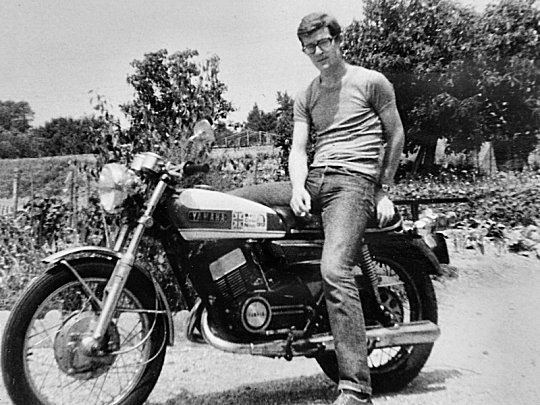
The author, Gilles Gaudechoux, posing aboard his Yamaha 350 R5 in 1971
Eventually I crawled into my tent, but sleep was impossible. A biblical storm swept across the campsite. A landslide in the upper section carried away two parked cars. Rumours spread that around ten serious accidents had occurred during the night, and I also heard that the young woman injured in the afternoon crash had died. Whether that was true or simply another rumour, I never found out.
That was enough for me.
At around six o'clock the following morning, I packed up my tent and decided to leave what had become a complete nightmare.
As I approached Grenoble, the weather finally began to improve... and so did my spirits.
But fate had one last surprise in store.
Near Lapalisse, exhausted after the long ride and a completely sleepless night, I crashed into a Peugeot 204. The damage was considerable: both fork tubes were bent, and I ended up with a serious haematoma on my thigh.
That is my genuine account of the only Chamois Rally I ever attended.
Even if the rally had returned in 1973, I would never have gone back.
- Gilles Gaudechoux